Monday, January 26, 2009
Friday, January 02, 2009
"Year of the Chinese and Russian Languages"
BEIJING, Dec. 31 (Xinhua) -- Chinese President Hu Jintao and his Russian counterpart Dmitry Medvedev exchanged congratulatory messages on New Year's eve on Wednesday, and announced the start of "the Year of the Chinese and Russian Languages".[...]
China and Russia will embrace the 60th anniversary of the establishment of diplomatic ties in 2009, when China will launch "the Year of Russian Language," while Russia will launch "the Year of Chinese Language" in 2010, the Chinese leader said.
- China View, 2008-12-31 19:00:11
Those are incidentally the languages I need to devote this year to improving.
Labels: Asia, I Stay Up Late and I Don't Do Anything Productive, Russia
Saturday, October 04, 2008
Behind Religious Harmony
Camille of Forsan et Hæc Olim Meminisse Iuvabit alerts us to this little-known article from Singapore's leading newspaper and official organ of the ruling party:
ZOROASTRIANISM is the 'sign of Zorro'. Islam is when 'their marriages take place in the void deck'. Buddhism is 'about filial piety'.
These were some comments made by youth here on various religions, as found in a study by former Aware president and educator Phyllis Chew.
[...]
While 76 per cent said they were 'tolerant' of other religions, their idea of tolerance was 'not talking about it'.
And while a whopping 92 per cent expressed desire to find out more about other religions, the majority said they would do so from the Internet.
At the same time, Dr Chew found that they switched religions through an emotional process. 'They will usually say things like, 'I've a good feeling (about this religion)' or 'My friends influenced me'.
'So it's not a very rational decision, like what are the pros, what are the cons. It's not very cognitive. The switching process is usually an emotional one.'
- News @ AsiaOne, Sep 14, 2008
It is as I have long feared. Religious tolerance (or 'harmony', as official sources often phrase it) in Singapore does not rest on mutual understanding and cooperation, but on a massive foundation of profound ignorance.
After all, what else can explain the existence of both 'Christian' and 'Catholic' as choices on official question forms? The leading newspapers continue to perpetuate this ignorant mistake, year after year, despite numerous friends writing in every so often to request that they refrain from doing so.
I disagree somewhat with the good doctor on the second quoted bit. Religious choice is hardly, if ever, a rational one. Some people are very systematic and insist on studying every detail, but these only make up a small percentage of converts. Most choose to convert based on a wide variety of factors, with intellectual rationalism usually not very high on their list of priorities.
Although, this would account for the massive increase in megachurch attendance this island nation has seen over the past few years - so much so, that a (nominally) Buddhist classmate was compelled to ask me if speaking in tongues and ecstatic Praise & Worship services were traditional components of Christian worship.
*sigh*
This is nation where students swim all day in the Sea of Knowledge and still come out completely dry.
ZOROASTRIANISM is the 'sign of Zorro'. Islam is when 'their marriages take place in the void deck'. Buddhism is 'about filial piety'.
These were some comments made by youth here on various religions, as found in a study by former Aware president and educator Phyllis Chew.
[...]
While 76 per cent said they were 'tolerant' of other religions, their idea of tolerance was 'not talking about it'.
And while a whopping 92 per cent expressed desire to find out more about other religions, the majority said they would do so from the Internet.
At the same time, Dr Chew found that they switched religions through an emotional process. 'They will usually say things like, 'I've a good feeling (about this religion)' or 'My friends influenced me'.
'So it's not a very rational decision, like what are the pros, what are the cons. It's not very cognitive. The switching process is usually an emotional one.'
- News @ AsiaOne, Sep 14, 2008
It is as I have long feared. Religious tolerance (or 'harmony', as official sources often phrase it) in Singapore does not rest on mutual understanding and cooperation, but on a massive foundation of profound ignorance.
After all, what else can explain the existence of both 'Christian' and 'Catholic' as choices on official question forms? The leading newspapers continue to perpetuate this ignorant mistake, year after year, despite numerous friends writing in every so often to request that they refrain from doing so.
I disagree somewhat with the good doctor on the second quoted bit. Religious choice is hardly, if ever, a rational one. Some people are very systematic and insist on studying every detail, but these only make up a small percentage of converts. Most choose to convert based on a wide variety of factors, with intellectual rationalism usually not very high on their list of priorities.
Although, this would account for the massive increase in megachurch attendance this island nation has seen over the past few years - so much so, that a (nominally) Buddhist classmate was compelled to ask me if speaking in tongues and ecstatic Praise & Worship services were traditional components of Christian worship.
*sigh*
This is nation where students swim all day in the Sea of Knowledge and still come out completely dry.
Wednesday, October 01, 2008
Eid ul-Fitr
I wish 'Eid Al-Mubarak' (literally, 'blessed Festival' in Arabic) to Muslim friends today, and while Malays and Turkmen generally understood me, the Kazakhs had no idea what I was saying.
Curious.
Curious.
Labels: Asia, Culture, Quips, Totally Random
Saturday, September 06, 2008
Choosing a Wife
A resident of the state of Chu had two wives. Another man tried to seduce the two women. First, he tried his tricks on the elder one, but was sworn at. Next, he approached the younger one, who easily fell prey to his charms.
Before very long, the husband of the two women died. Both of them were ready to remarry.
The go-between asked the interloper, "Which of the two women do you wish to marry?"
"I prefer the elder one."
The matchmaker replied, "Didn't the elder one curse you? And didn't the younger one comply with your wishes?"
"What you say is true. As long as the younger one was another man's wife, I was glad to have her as my lover, but I prefer a fierce woman who knows how to swear and is unlikely to become another man's lover."
Ding Cong, Wit & Humour from Ancient China (Asiapac, 1997), translated by Ma Mingtong & Xu Hui
Before very long, the husband of the two women died. Both of them were ready to remarry.
The go-between asked the interloper, "Which of the two women do you wish to marry?"
"I prefer the elder one."
The matchmaker replied, "Didn't the elder one curse you? And didn't the younger one comply with your wishes?"
"What you say is true. As long as the younger one was another man's wife, I was glad to have her as my lover, but I prefer a fierce woman who knows how to swear and is unlikely to become another man's lover."
Ding Cong, Wit & Humour from Ancient China (Asiapac, 1997), translated by Ma Mingtong & Xu Hui
Saturday, August 30, 2008
Gains from Trade
I don't normally post anything about the economy (a topic I have little interest in), but this has proved to be a most fascinating read. James Fallows on who benefits most from China's manufacturing boom:
Has the move to China been good for American companies? The answer would seemingly have to be yes—otherwise, why would they go there? It is conceivable that bad partnerships, stolen intellectual property, dilution of brand name, logistics nightmares, or other difficulties have given many companies a sour view of outsourcing; I have heard examples in each category from foreign executives. But the more interesting theme I have heard from them, which explains why they are willing to surmount the inconveniences, involves something called the “smiley curve.”
The curve is named for the U-shaped arc of the 1970s-era smiley-face icon, and it runs from the beginning to the end of a product’s creation and sale. At the beginning is the company’s brand: HP, Siemens, Dell, Nokia, Apple. Next comes the idea for the product: an iPod, a new computer, a camera phone. After that is high-level industrial design—the conceiving of how the product will look and work. Then the detailed engineering design for how it will be made. Then the necessary components. Then the actual manufacture and assembly. Then the shipping and distribution. Then retail sales. And, finally, service contracts and sales of parts and accessories.
The significance is that China’s activity is in the middle stages—manufacturing, plus some component supply and engineering design—but America’s is at the two ends, and those are where the money is. The smiley curve, which shows the profitability or value added at each stage, starts high for branding and product concept, swoops down for manufacturing, and rises again in the retail and servicing stages. The simple way to put this—that the real money is in brand name, plus retail—may sound obvious, but its implications are illuminating.
At each factory I visited, I asked managers to estimate how much of a product’s sales price ended up in whose hands. The strength of the brand name was the most important variable. If a product is unusual enough and its brand name attractive enough, it could command so high a price that the retailer might keep half the revenue. (Think: an Armani suit, a Starbucks latte.) Most electronics products are now subject to much fiercer price competition, since it is so easy for shoppers to find bargains on the Internet. Therefore the generic Windows-style laptops I saw in one modern factory might go for around $1,000 in the United States, with the retailer keeping less than $50.
Where does the rest of the money go? The manager of that factory guessed that Intel and Microsoft together would collect about $300, and that the makers of the display screen, the disk-storage devices, and other electronic components [in Malaysia, Korea, and elsewhere outside China] might get $150 or so apiece. The keyboard makers would get $15 or $20; FedEx or UPS would get slightly less. When all other costs were accounted for, perhaps $30 to $40—3 to 4 percent of the total—would stay in China with the factory owners and the young women on the assembly lines.
Other examples: A carrying case for an audio device from a big-name Western company retails for just under $30. That company pays the Chinese supplier $6 per case, of which about half goes for materials. The other $24 stays with the big-name company. An earphone-like accessory for another U.S.-brand audio device also retails for about $30. Of this, I was told, $3 stayed in China. I saw a set of high-end Ethernet connecting cables. The cables are sold, with identical specifications but in three different kinds of packaging, in three forms in the United States: as a specialty product, as a house brand in a nationwide office-supply store, and with no brand over eBay. The retail prices are $29.95 for the specialty brand, $19.95 in the chain store, and $15.95 on eBay. The Shenzhen-area company that makes them gets $2 apiece.
In case the point isn’t clear: Chinese workers making $1,000 a year have been helping American designers, marketers, engineers, and retailers making $1,000 a week (and up) earn even more. Plus, they have helped shareholders of U.S.-based companies.
- China Makes, The World Takes, The Atlantic, July/August 2007
There's just one problem with this. The low-income class in America who aren't benefiting from this form the largest voter section, and I doubt they enjoy the fact that their richer peers are making more while they get nothing out this.
Just one of many reasons why democracy is something the majority can easily abuse.
Has the move to China been good for American companies? The answer would seemingly have to be yes—otherwise, why would they go there? It is conceivable that bad partnerships, stolen intellectual property, dilution of brand name, logistics nightmares, or other difficulties have given many companies a sour view of outsourcing; I have heard examples in each category from foreign executives. But the more interesting theme I have heard from them, which explains why they are willing to surmount the inconveniences, involves something called the “smiley curve.”
The curve is named for the U-shaped arc of the 1970s-era smiley-face icon, and it runs from the beginning to the end of a product’s creation and sale. At the beginning is the company’s brand: HP, Siemens, Dell, Nokia, Apple. Next comes the idea for the product: an iPod, a new computer, a camera phone. After that is high-level industrial design—the conceiving of how the product will look and work. Then the detailed engineering design for how it will be made. Then the necessary components. Then the actual manufacture and assembly. Then the shipping and distribution. Then retail sales. And, finally, service contracts and sales of parts and accessories.
The significance is that China’s activity is in the middle stages—manufacturing, plus some component supply and engineering design—but America’s is at the two ends, and those are where the money is. The smiley curve, which shows the profitability or value added at each stage, starts high for branding and product concept, swoops down for manufacturing, and rises again in the retail and servicing stages. The simple way to put this—that the real money is in brand name, plus retail—may sound obvious, but its implications are illuminating.
At each factory I visited, I asked managers to estimate how much of a product’s sales price ended up in whose hands. The strength of the brand name was the most important variable. If a product is unusual enough and its brand name attractive enough, it could command so high a price that the retailer might keep half the revenue. (Think: an Armani suit, a Starbucks latte.) Most electronics products are now subject to much fiercer price competition, since it is so easy for shoppers to find bargains on the Internet. Therefore the generic Windows-style laptops I saw in one modern factory might go for around $1,000 in the United States, with the retailer keeping less than $50.
Where does the rest of the money go? The manager of that factory guessed that Intel and Microsoft together would collect about $300, and that the makers of the display screen, the disk-storage devices, and other electronic components [in Malaysia, Korea, and elsewhere outside China] might get $150 or so apiece. The keyboard makers would get $15 or $20; FedEx or UPS would get slightly less. When all other costs were accounted for, perhaps $30 to $40—3 to 4 percent of the total—would stay in China with the factory owners and the young women on the assembly lines.
Other examples: A carrying case for an audio device from a big-name Western company retails for just under $30. That company pays the Chinese supplier $6 per case, of which about half goes for materials. The other $24 stays with the big-name company. An earphone-like accessory for another U.S.-brand audio device also retails for about $30. Of this, I was told, $3 stayed in China. I saw a set of high-end Ethernet connecting cables. The cables are sold, with identical specifications but in three different kinds of packaging, in three forms in the United States: as a specialty product, as a house brand in a nationwide office-supply store, and with no brand over eBay. The retail prices are $29.95 for the specialty brand, $19.95 in the chain store, and $15.95 on eBay. The Shenzhen-area company that makes them gets $2 apiece.
In case the point isn’t clear: Chinese workers making $1,000 a year have been helping American designers, marketers, engineers, and retailers making $1,000 a week (and up) earn even more. Plus, they have helped shareholders of U.S.-based companies.
- China Makes, The World Takes, The Atlantic, July/August 2007
There's just one problem with this. The low-income class in America who aren't benefiting from this form the largest voter section, and I doubt they enjoy the fact that their richer peers are making more while they get nothing out this.
Just one of many reasons why democracy is something the majority can easily abuse.
Tuesday, August 26, 2008
Quake Rocks Tibet
BEIJING (AFP) - A 6.3-magnitude earthquake rocked Tibet in southwestern China late Monday, the US Geological Survey said but there were no immediate reports of major damage or casualties.
The quake struck at 9:22 pm (1322 GMT), 225 kilometres (140 miles) northeast of Jumla, Nepal, at a depth of 35 kilometres, the USGS said.
- Yahoo!Xtra News, August 26, 2008, 5:03 am
A friend remarked, "Any karma theories this time?"
The quake struck at 9:22 pm (1322 GMT), 225 kilometres (140 miles) northeast of Jumla, Nepal, at a depth of 35 kilometres, the USGS said.
- Yahoo!Xtra News, August 26, 2008, 5:03 am
A friend remarked, "Any karma theories this time?"
Labels: Asia, Quotations
Wednesday, August 20, 2008
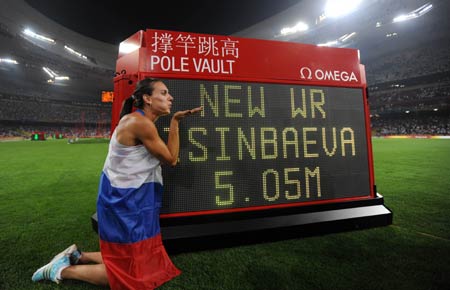
Elena Isinbaeva's New World Record
Incredible.She continues to amaze; not only has she taken yet another Olympic gold, but she has also broken yet another world record.
Nothing seems to stop Elena Isinbaeva from breaking records. Not even the supposedly 'polluted' air over Beijing; she broke yet another record yesterday - her own, no less - clearing an unbelievable 5.05 metres at the women's pole vault finals.I first saw her in action (and consequently became a fan) during the 2004 Athens Olympics. What caught my eye initially was her extremely long (relatively speaking), braided hair then as well as the small, gold St Olga cross around her neck (ah, athletes from Orthodox countries!).
Almost all the competitors I grew to admire at the last Olympics have since retired from their respective sports. Elena however, continues to reign supreme.
Strong and resolute, she is an inspiration to us all!
Isinbaeva murmured before each attempt, she decoded the murmuring, "Do it, do it, just do it. Just be confident, I'm OK."
- Sina.com, 2008-08-19 03:16:43 GMT
And for those who have not yet seen, or wish to watch that exciting moment again:
Labels: Asia, Celebrities, Quotations, Russia
Wednesday, June 25, 2008
Ever Wonder Why...
...it matters what you wear to church on Sunday?
After all, it doesn't matter whether you wear slippers or tuxedo - all of this is meaningless externals. God loves you no matter what, right?
Why do little things matter?
via Orwell's Picnic
After all, it doesn't matter whether you wear slippers or tuxedo - all of this is meaningless externals. God loves you no matter what, right?
Why do little things matter?
via Orwell's Picnic
Labels: Asia, O Tempore O Mores, Protestants
Thursday, June 19, 2008
Why the West Reveres the Dalai Lama
The Dalai Lama has effectively been turned into a cartoon good guy. In America and western Europe, where backward anti-modern sentiments are widespread amongst self-loathing sections of the educated and the elite, the Dalai Lama has been embraced as a living, breathing representative of unsullied goodness. Despite the fact that he advertises Apple, guest-edits Vogue and drives a Land Rover, he is held up as evidence that living the simple eastern life is preferable to, in the words of Philip Rawson, westerners' "gradually more pointless pursuit of material satisfactions". Just as earlier generations of disillusioned aristocrats fell in love with a fictional version of Tibet (Shangri-La), so contemporary un-progressives idolise a fictional image of the Dalai Lama.
- Brendan O'Neill, 'Down with the Dalai Lama', guardian.co.uk, Thursday May 29 2008
Labels: America, Asia, Europe, Monasticism, O Tempore O Mores
Saturday, June 07, 2008
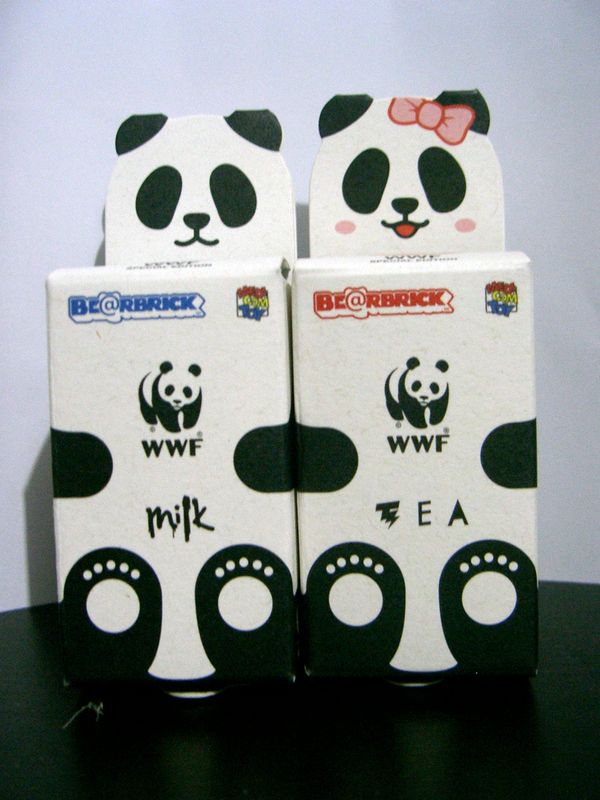
On KFC Drink Packets in China...
DaveMintheOffice:[2:15]
i hope that said products are not made from panda
[2:16]
at first i thought it said "WTF"
Labels: Asia, Culture, Food, Quips, Quotations
Wednesday, November 28, 2007
Asian Failure
A little something Edward found while trawling Facebook:
If you get anything less than an A in ANY school subject, your parents are gonna kick your ass because anything less than an A wont get you into university. Congratulations, you have Asian failed. Join the club.
-ASIAN PERCENTAGES FOR THE KIDS-
100-90 - "YES!... phew"
90-86 - "Ohhhkayyyyyy"
85-80 - "Damnit!" <--- Asian failure starts here
70-80 - "Aw shit!"
60-70 - "Oh f*ck! My mom's gonna kill me!"
50-60 - "F*ck f*ckedy f*ckf*ckf*ck!"
<50? - Uh, well, if you don't kill yourself, your parents will
-ASIAN PERCENTAGES FOR THE PARENTS-
100-93 - "Hmm... okay"
93-80 - "Better improve it... NOW"
<80 - AIYAAA WTF LAHHH *pulls out hair*!!!
If you get anything less than an A in ANY school subject, your parents are gonna kick your ass because anything less than an A wont get you into university. Congratulations, you have Asian failed. Join the club.
-ASIAN PERCENTAGES FOR THE KIDS-
100-90 - "YES!... phew"
90-86 - "Ohhhkayyyyyy"
85-80 - "Damnit!" <--- Asian failure starts here
70-80 - "Aw shit!"
60-70 - "Oh f*ck! My mom's gonna kill me!"
50-60 - "F*ck f*ckedy f*ckf*ckf*ck!"
<50? - Uh, well, if you don't kill yourself, your parents will
-ASIAN PERCENTAGES FOR THE PARENTS-
100-93 - "Hmm... okay"
93-80 - "Better improve it... NOW"
<80 - AIYAAA WTF LAHHH *pulls out hair*!!!
Tuesday, November 27, 2007
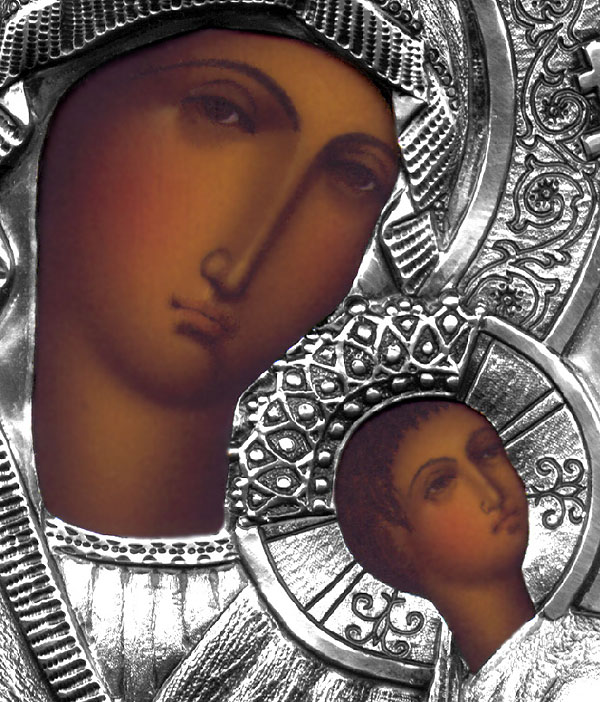
Saint Buddha
Today's saints (according to the Roman Catholic calendar; the Orthodox mark it on 26 August) is perhaps the most peculiar commemoration in the Church calendar - East or West:Barlaam and Josaphat are said to have lived in third or fourth century India, where the Gospel was first preached by St Thomas the Apostle. The religion had grown steadily, but was persecuted by, among others, one King Abenner. This king was told by his astrologers that his son Josaphat would become a Christian. King Abenner kept his son locked away from the outside world to prevent this prophecy from coming true, but a Christian hermit named Barlaam preached the Chrsitian religion to the young prince, and he converted. King Abenner later became a Christian and then a hermit. Josaphat became king, but abdicated soon after to live a life of ascetic piety.
Josaphat's tale was wildly popular in the Middle Ages, and versions of it appeared in nearly all European languages, from Armenian to Icelandic. It was the basis of La vida es sueño (Life is a dream), the masterpiece by Spanish Golden Age playwright Pedro Calderón de la Barca. The legend quite nearly circumnavigated the globe; a version of it came into being in the Tagalog language of the Philippines.
The story, it turns out, is a Christianized retelling of the story of Prince Siddhartha Gautama, the Buddha. Before his birth a seer predicted he would either be a great king or a holy man. To ensure the former outcome, his father the king shielded the boy from all forms of religious teaching and from witnessing any form of human suffering. Having accidentally witnessed the latter, he left his palace to lead an ascetic life. The Buddha's story traveled in all four directions. As it traveled west, the Sanskrit "Bodhisattva" became "Bodisav" in Persian, "Budhasaf" or "Yudasaf" in Arabic, "Iodasaph" in Georgian, "Ioasaph" in Greek, and "Josaphat" in Latin.
Thus, the Buddha came to be venerated in Christendom. This remarkable origin of this tale need not be cause for embarrassment. It is a testimony to the faith of the Age of Faith, whose children yearned for holiness and recognized it when they saw it, even in a tale from a faraway land. Without access to a fact-checking resource like Wikipedia, it is easy to see how such a cultus could have developed.
Were the Christians of the Middle Ages who asked for St Josaphat's intercessions praying to the Bodhisattva? Were the many parishes named after St Josaphat erected in honor of the Buddha?
MORE at the Western Confucian's interpretation of what this could mean to the Church.
Labels: Asia, Monasticism, Religion, Saints, The Christian West, The Orthodox Church
Wednesday, November 07, 2007
90th Anniversary of the October Revolution
Dear Comrades:On the occasion of the ninetieth anniversary of the Great October Socialist Revolution, I have the honour to offer warm fraternal congratulations to my readers, and to all the comrades and friends present.
For thousands of years the working people of the world and all progressive humanity have dreamed of building a society in which there would be no exploitation of man by man, This dream was realized on one-sixth of the earth's land surface for the first time in history by the October Revolution. This revolution proves that, without the landlords and the bourgeoisie, the people are completely capable of building a free and happy new life in a planned way. It also proves that different nations of the world are completely capable of living together amicably once there is no imperialist oppression.
...or so it did, at least for a while.
Socialism is a wonderful idea. It is only as a reality that it has been disastrous. Among people of every race, colour, and creed, all around the world, socialism has led to hunger in countries that used to have surplus food to export.
A more careful review of the facts will show that socialism is not sustainable - it does not work. Period. Every experiment has failed; every treatise has been decisively refuted at its logical roots. Places where we continue to dabble - education, medicine, etc - in our "mixed" economy, are unmitigated disasters.
It comes down to this:
1) Free people are not equal - and equal people are not free. I'm not referring to equality before the law - that is to say, equality in income and material wealth. We shouldn't get hung up about differences in wealth as result of people being themselves. If it's a result of artificial political barriers then we should do what we can to get rid of them - but don't try to place fundamentally unequal people into a homogeneous heap - it won't work and you'll destroy everything in trying. Read up on the histories of Stalin, Khmer Rouge, etc.
2) What belongs to you, you take care of; what belongs to no one or everyone tends to fall into disrepair. This is the magic of private property - and a big reason why socialism fails.
3) If you encourage something you get more of it; if you discourage something you get less of it. We are creatures of incentives and disincentives. What to break up families? Offer a bigger welfare check if the father splits. Want to get less work? Impose such high tax penalties on it that people decide it's not worth the effort... Want to discourage investment? How about a high capital gains tax?
4) Nobody spends somebody else's money as carefully as he spends his own.
5) Government has nothing to give anybody except what it first takes away from somebody, and a government that is big enough to give you everything you want is big enough to take away everything you've got. This bears some serious reflection for those who think, "we can be different this time..."
To quote Lawrence Reed, president of the Mackinac Center for Public Policy: "Liberty isn't just a luxury or a nice idea. It's not just a defensible idea or a happy circumstance. It's what makes just about everything else happen. Without it, life is a bore at best. At worst, there is no life at all."
Nevertheless, for many of those who deal primarily in ideas, socialism remains an attractive idea - in fact, seductive. Its every failure is explained away as due to the inadequacies of particular leaders.
Many of the intelligentsia remain convinced that if only there had been better leaders - people like themselves, for example - it would all have worked out fine, according to plan.
In all the very different societies around the world, however, the story of socialism has been a story of high hopes and bitter disappointments. Attempts to redistribute wealth repeatedly led to the redistribution of poverty.
Attempts to free ordinary people from oppression repeatedly led to what Mikhail Gorbachev frankly called "servility" to new despots.
Human nature has been at the heart of the failures of socialism to produce the results it sought, even when socialist leaders were idealists like Julius Nyerere in Tanzania or Pandit Nehru in India.
Nowhere have people been willing to work as well for the common good as they do for their own benefit. Perhaps in some other galaxy there are creatures who would, but the track record of socialism among human beings on earth shows that this is not the place.
Worst of all, the concentration of political power necessary to try to reduce economic inequalities has allowed tyrants like Stalin, Mao and Pol Pot to impose their notions and caprices on millions of others - draining them economically or slaughtering them en masse or exploiting them sexually.
There is no point blaming the tragedies of socialism on the flaws or corruption of particular leaders. Any system which allows some people to exercise unbridled power over other people is an open invitation to abuse, whether that system is called slavery or socialism or something else.
Socialism has long sought to create a heaven on earth but an even older philosophy pointed out that the road to hell is paved with good intentions.
Friday, October 12, 2007
Park ee Partsoons!
Glory to God!
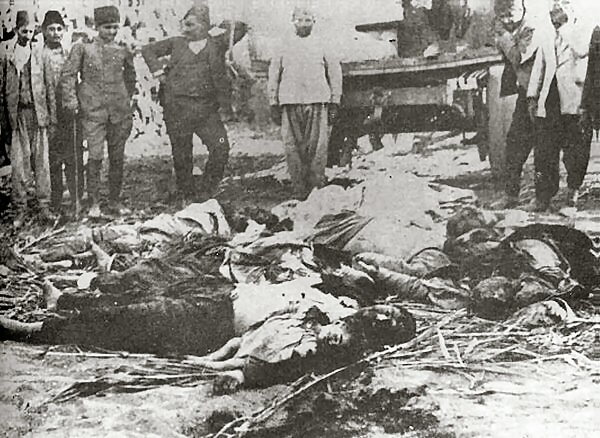
WASHINGTON, Oct. 10 — A House committee voted on Wednesday to condemn the mass killings of Armenians in Turkey in World War I as an act of genocide, rebuffing an intense campaign by the White House and warnings from Turkey’s government that the vote would gravely strain its relations with the United States.
- The New York Times, October 11, 2007
Wednesday’s vote by the US Congress on the Armenian Genocide was one of those rare moments when politicians did the right thing in the face of pressure.
It's about time.
American recognition of this atrocity has been long due:
The House of Representatives finds the following:
The Armenian Genocide was conceived and carried out by the Ottoman Empire from 1915 to 1923, resulting in the deportation of nearly 2,000,000 Armenians, of whom 1,500,000 men and women and children were killed, 500,000 survivors were expelled from their homes, and which succeeded in the elimination of the over 2,500-year presence of Armenians in their historic homeland.
Turkey's response was not entirely unexpected. Turkish president Abdullah Gul alleged that some US politicians had "closed their ears to calls to be reasonable and once again sought to sacrifice big problems for small domestic political games".
Reasonable?
Sorry, Turkey! There's no denying the truth.
It is high time that Ankara begin a process of introspection and come to terms with its own tragic past, thus gradually ending its vicious and wasteful (millions of dollars are being spent yearly by the Turkish government) campaign of denial and whitewashing of history.
WASHINGTON, Oct. 10 — A House committee voted on Wednesday to condemn the mass killings of Armenians in Turkey in World War I as an act of genocide, rebuffing an intense campaign by the White House and warnings from Turkey’s government that the vote would gravely strain its relations with the United States.
- The New York Times, October 11, 2007
Wednesday’s vote by the US Congress on the Armenian Genocide was one of those rare moments when politicians did the right thing in the face of pressure.
It's about time.
American recognition of this atrocity has been long due:
The House of Representatives finds the following:
The Armenian Genocide was conceived and carried out by the Ottoman Empire from 1915 to 1923, resulting in the deportation of nearly 2,000,000 Armenians, of whom 1,500,000 men and women and children were killed, 500,000 survivors were expelled from their homes, and which succeeded in the elimination of the over 2,500-year presence of Armenians in their historic homeland.
Turkey's response was not entirely unexpected. Turkish president Abdullah Gul alleged that some US politicians had "closed their ears to calls to be reasonable and once again sought to sacrifice big problems for small domestic political games".
Reasonable?
Sorry, Turkey! There's no denying the truth.
It is high time that Ankara begin a process of introspection and come to terms with its own tragic past, thus gradually ending its vicious and wasteful (millions of dollars are being spent yearly by the Turkish government) campaign of denial and whitewashing of history.
Thursday, July 19, 2007
July's Food Recommendation
With temperatures soaring to record highs, I'm beginning to develop a real craving for a dish I had over two years ago while in Seoul. It was my first experience with Korean cuisine; I have not had it since - I haven't been able to find it here in Singapore (if anybody knows, please TELL ME!).
I'd strongly recommend it to anybody who, like me, is suffering under the intense heat and humidity of July.
Widely believed to be a cure for numerous physical ailments, samgyetang (삼계탕) is also an excellent remedy for a hot summer. Consisting of a whole young chicken stuffed with glutinous rice, and boiled in a delicious broth of Korean ginseng, dried jujube fruit, garlic and ginger, its nutrients are thought to replace those that are easily lost through excessive perspiration during the hot summer months. Do note that only whole uncut ingredients are used for the dish, as they preserve the maximum amount of nutrients.
Mildly fragrant, the soup is delicious and the chicken tender - a most appetizing dish for any time of year!
I'd strongly recommend it to anybody who, like me, is suffering under the intense heat and humidity of July.
Widely believed to be a cure for numerous physical ailments, samgyetang (삼계탕) is also an excellent remedy for a hot summer. Consisting of a whole young chicken stuffed with glutinous rice, and boiled in a delicious broth of Korean ginseng, dried jujube fruit, garlic and ginger, its nutrients are thought to replace those that are easily lost through excessive perspiration during the hot summer months. Do note that only whole uncut ingredients are used for the dish, as they preserve the maximum amount of nutrients.Mildly fragrant, the soup is delicious and the chicken tender - a most appetizing dish for any time of year!