Monday, December 10, 2007

The Twelve Days of Christmas

We all know how terribly secularized Christmas has become, and with each passing year it seems that there is no way to cast off the materialism and return that day to what it once stood for.

So once again, Christians must go underground to preserve the true meaning of Christmas (something every holiday special on television speaks of but never really discovers). The march to secularize every symbolism and make meaningless every tradition goes ever on, but there are ways one can resist. I relate a tale of such a resistance. The story is probably apocryphal, but it is an encouraging and heartwarming one nonetheless:

During the English Reformation, Catholics in England were prohibited from any practice of their faith by law in public or private. It is said that the delightful nonsense rhyme, "The Twelve Days of Christmas" was written as one of the catechism songs to help young Catholics learn the tenets of the faith - as to be caught with anything in writing indicating even remote adherence to the Catholic faith would warrant serious punishment.

The gifts in the song are hidden meanings to the teachings of the faith. The "true love" mentioned in the song does not refer to any earthly suitor, but to God Himself. The "me" who receives the presents refer to every baptised person. The symbols in the song mean the following:

A Partridge in a Pear Tree = Christ as the partridge, the cross as the pear tree
2 Turtle Doves = The Old and New Testaments
3 French Hens = The three gifts of the Magi, Faith, Hope, and Charity (the theological virtues), or the three Persons of the Trinity
4 Calling Birds = The Four Gospels/Evangelists
5 Golden Rings = The Pentateuch (the first 5 books of the Old Testament)
6 Geese A-laying = The six days of creation
7 Swans A-swimming = The seven gifts of the Holy Spirit or the seven sacraments
8 Maids A -milking = The eight beatitudes
9 Ladies Dancing = The nine fruits of the Holy Spirit
10 Lords A-leaping = The Ten Commandments
11 Pipers Piping = The eleven faithful Apostles
12 Drummers Drumming = The twelve articles in the Apostles' Creed

Now, there are several flaws in this tale: the first, most obvious would be its use restricted only to Christmastime. How would such a song be useful then in aiding children to memorizing anything? Besides, these were basic articles of faith common to all denominations of Christianity; none of the aforementioned concepts would distinguish a Catholic from a Protestant.

In any case, the true meaning of this song has been lost to time. The author of this blog however, praises the anonymous one who accorded this song its meaning for his/her effort and time in reminding us once again that this holiday is a Christian one, and above all, the day "on which unseen grace is given man by the birth of the Word of God from the Virgin Mary for the salvation of the world", as it says in the Apostolic Constitutions.

Research carried out indicated that it is possible that "The Twelve Days of Christmas" was perhaps confused with a song called "A New Dial" or "In Those Twelve Days", a song, which unfortunately, has been lost to time as well. Dating back to at least 1625, it assigns meaning to each of the twelve days, though it is doubtful that it was used to teach catechism. I do not know how its tune goes, but it is nonetheless a most splendid ditty to commit to memory this Christmastime.

Here it goes:

What are they that are but one?
We have one God alone
In heaven above sits on His throne.

What are they which are by two?
Two testaments, the old and new,
We do acknowledge to be true.

What are they which are but three?
Three persons in the Trinity
Which make one God in unity.

What are they which are but four?
Four sweet Evangelists there are,
Christ's birth, life, death which do declare

What are they which are but five?
Five senses, like five kings, maintain
In every man a several reign.

What are they which are but six?
Six days to labour is not wrong,
For God Himself did work so long.

What are they which are but seven?
Seven liberal arts hath God sent down
With divine skill man's soul to crown.

What are they which are but eight?
Eight Beatitudes are there given
Use them right and go to heaven.

What are they which are but nine?
Nine muses, like the heaven's nine spheres,
With sacred tunes entice our ears.

What are they which are but ten?
Ten statutes God to Moses gave
Which, kept or broke, do spill or save.

What are they which are but eleven?
Eleven thousand virgins did partake
And suffered death for Jesus' sake.

What are they which are but twelve?
Twelve are attending on God's Son;
Twelve make our creed. The Dial's done.

Labels: ,

Monday, October 22, 2007

Agni Parthene: Slavonic Lyrics (Transliterated!)

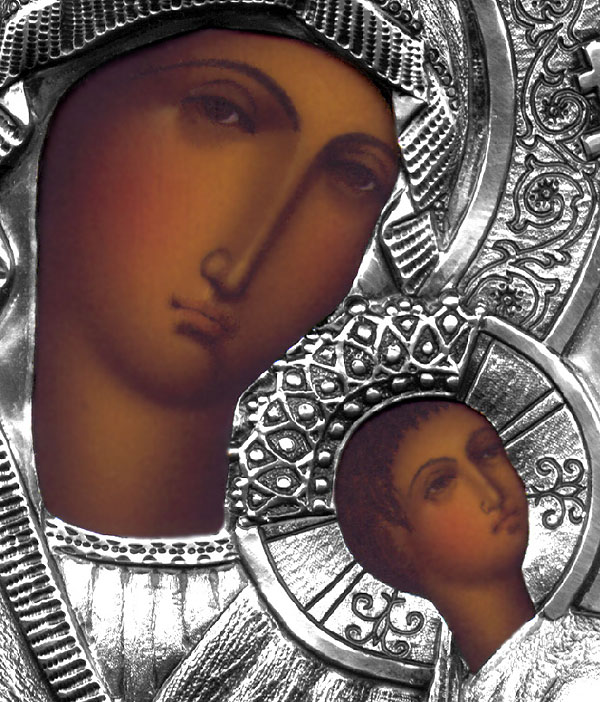
Αγνή Παρθένε (Agni Parthene; en: O Virgin Pure) is a stunningly beautiful hymn, composed by St Nektarios of Aegina in the 19th century during his tenure as director of the Rizarios Theological School of Athens. St Nektarios liked to compose hymns in honour of the Mother of God to nourish his personal prayer and that of his disciples. It is said that our Lady herself appeared before him, and requested that he record on paper a particular hymn the angelic choirs were about to sing. That hymn was 'Agni Parthene'.

Expressive, beautiful and elegant, this hymn is perhaps the most accessible point of entry into Byzantine chant. One hearing is often enough to set this tune in the mind of its listener, especially with its oft-repeated refrain.

Although sung and performed in many languages, the Slavonic rendition by the Valaam monastery choir (complete with bells) in particular has fascinated and entranced many - both Orthodox and non-Orthodox alike - much more so than the other versions. I haven't quite been able to explain why, but I suspect the distinctive style of Valaam chant produces an air of tenderness and supplication unheard in other recordings.

For those who would like to follow the hymn as it is being chanted, I have found the lyrics and transliterated them for your uh, singing pleasure:

Агни Парфене (преподобный Нектарий Аэгинский)
Agni Parfene (prepodobniyy Nekatriy Aeginskiy)

Марие, Дево Чистая, Пресвятая Богородице,
Marie, Devo Chistaya, Presvyataya Bogoroditse
Радуйся Невесто Неневестная.
Raduysya Nevesto Nenevestnaya.
Царице Мати Дево, Руно всех покрывающее,
Tsaritse Mati Devo, Runo vsekh pokriyvayushchee
Радуйся Невесто Неневестная.
Raduysya Nevesto Nenevestnaya.
Превысшая Небесных Сил, Нетварное Сияние.
Previysshaya Nebesniykh Sil, Netvarnoe Siyanie.
Радуйся Невесто Неневестная.
Raduysya Nevesto Nenevestnaya.
Ликов девичьих Радосте, и Ангелов Превысшая,
Likov devich'ikh Radoste, i Angelov Previysshaya,
Радуйся Невесто Неневестная.
Raduysya Nevesto Nenevestnaya.
Небес Честная Сило, и Свете паче все светов,
Nebes Chestnaya Silo, i Svete pache vse svetov,
Радуйся Невесто Неневестная.
Raduysya Nevesto Nenevestnaya.
Честнейшая Владычице всех Небесных Воинств,
Chestneyshaya Vladiychitse veskh Nebesniykh Voinstv,
Радуйся Невесто Неневестная.
Raduysya Nevesto Nenevestnaya.
Всех праотцев Надеждо, пророков Исполнение,
Vsekh praottsev Nadezhdo, prorokov Ispolnenie,
Радуйся Невесто Неневестная.
Raduysya Nevesto Nenevestnaya.
В подвизех Ты - Помоще, Кивоте Бога Слова,
V podvizekh Tiy - Pomoshche, Kivote Boga Slova,
Радуйся Невесто Неневестная.
Raduysya Nevesto Nenevestnaya.
И девам - Ликование, и матерем - Отрадо,
I devam - Likovanie, i materem - Otrado,
Радуйся Невесто Неневестная.
Raduysya Nevesto Nenevestnaya.
Целомудрия Наставнице, душ наших Очищение,
Tselomudpriya Nastavnitse, dush nashikh Ochishchenie,
Радуйся Невесто Неневестная.
Raduysya Nevesto Nenevestnaya.
Покрове ширший облака, и страждущих Пристанище,
Pokrove shirshiy oblaka, i strazhdushchikh Pristanishche,
Радуйся Невесто Неневестная.
Raduysya Nevesto Nenevestnaya.
Немощных Покров и Заступнице, Надеждо ненадежных,
Nemoshchniykh Pokrov i Zastupnitse, Nadezhdo nenadezhniykh,
Радуйся Невесто Неневестная.
Raduysya Nevesto Nenevestnaya.
Марие - Мати Христа - Истиннаго Бога,
Marie - Mati Khrista - Istinnago Boga,
Радуйся Невесто Неневестная.
Raduysya Nevesto Nenevestnaya.
Ааронов Жезле Прозябший, Сосуде тихой радости,
Aaronov zhezle prozyabshiy, Sosude tikhoy radosti,
Радуйся Невесто Неневестная.
Raduysya Nevesto Nenevestnaya.
Всех сирых и вдов Утешение, в бедах и скорбех - Помоще,
Vsekh siriykh i vdov Uteshenie, v belakh i skorbekh - Pomoshche,
Радуйся Невесто Неневестная.
Raduysya Nevesto Nenevestnaya.
Священная и Непорочная, Владычице Всепетая,
Svyashchennaya i Neporochnaya, Vladiychitse Vsepetaya,
Радуйся Невесто Неневестная.
Raduysya Nevesto Nenevestnaya.
Приклони ко мне милосердие Божественнаго Сына,
Prikloni ko mne miloserdie Bozhestvennago Siyna,
Радуйся Невесто Неневестная.
Raduysya Nevesto Nenevestnaya.
Ходайце спасения, припадая взываю Ти:
Khodaitse spaseniya, pripadaya vziyvayu Ti:
Радуйся Невесто Неневестная.
Raduysya Nevesto Nenevestnaya.

And if you haven't heard this beautiful hymn, you may listen to it by clicking this link.

Labels: , , ,

Sunday, May 27, 2007

The Fiftieth Day

I am the light of the world. He who follows Me shall not walk in darkness, but have the light of life.
John 8:12

Today, fifty days after the Great and Holy Feast of Pascha and ten days after the Feast of the Ascension of Christ, we celebrate the Feast of Holy Pentecost, commemorating the descent of the Holy Spirit upon the Apostles.

We also celebrate the establishment of the Church on this day, which saw the preaching of the Apostles and the baptism of thousands who believed in the message of salvation through Our Lord Jesus Christ. This Feast is the culmination of the revelation of the Holy Trinity.

For the Christian East, the descent of the Holy Spirit is also understood as a reversal of the events at the Tower of Babel. There, mankind was divided by the confusion of tongues; but here, mankind is united by the gift of tongues.

When the most High came down and confused the tongues,
He divided the nations;
But when he distributed the tongues of fire
He called all to unity.
Therefore, with one voice, we glorify the Most Holy Spirit!


Kontakion, Tone 8

Speaking of the Holy Spirit, I remember a Greek-Australian friend, Kosma, a theologian who has since been tonsured a monk, mention that the Anna Vissi song, "Eisai" was a favourite of the secretary to the Greek Archbishop of Sydney. Something about the lyrics being about the Holy Spirit.

Take a look at this performance from the Closing Ceremony of the 2004 Olympics and see if you agree!

Lyrics

Chorus:
Ise, sto ema, stis fleves, sta kitara mou,
Ise, ston aera, pou anapneo, sti monaksia mou

You are in my blood , in my veins, in my cells,
You are in the air that I breathe, in my loneliness.

Ise i mera mou, ise i nihta mou,
Ise to lioma mou, ke ta ksenihtia mou,
Ise o paradisos stis paresthisis mou,
Ise to karma mou, ki oles i esthisis mou.

You are my day, you are my night,
You are my intoxication, and my late nights,
You are paradise in my hallucinations,
You are my karma, and all my sensations.

Chorus:
Ise, sto ema, stis fleves, sta kitara mou,
Ise, ston aera, pou anapneo, sti monaksia mou.

You are in my blood , in my veins, in my cells,
You are in the air that I breathe, in my loneliness.

Esi, ti zoi mou orizis,
Esi, to mialo mou trelenis,
Esi, se ola iparhis,
Esi, ki as min ise edo.

You determine my life,
You confuse my mind,
You exist in everything,
You, even if you're not here.

Labels: , , , ,